Read the rules before the colour.
Look for complete terms, visible support routes, clear game states and a history that lets you check what happened.
Rummy games and formats
The three labels describe the same 13-card deal, but they answer three different questions about when a session ends and how the score is settled.

Start with the detail that changes your next decision, whether that is a first hand, a format comparison or a safer way to set limits.
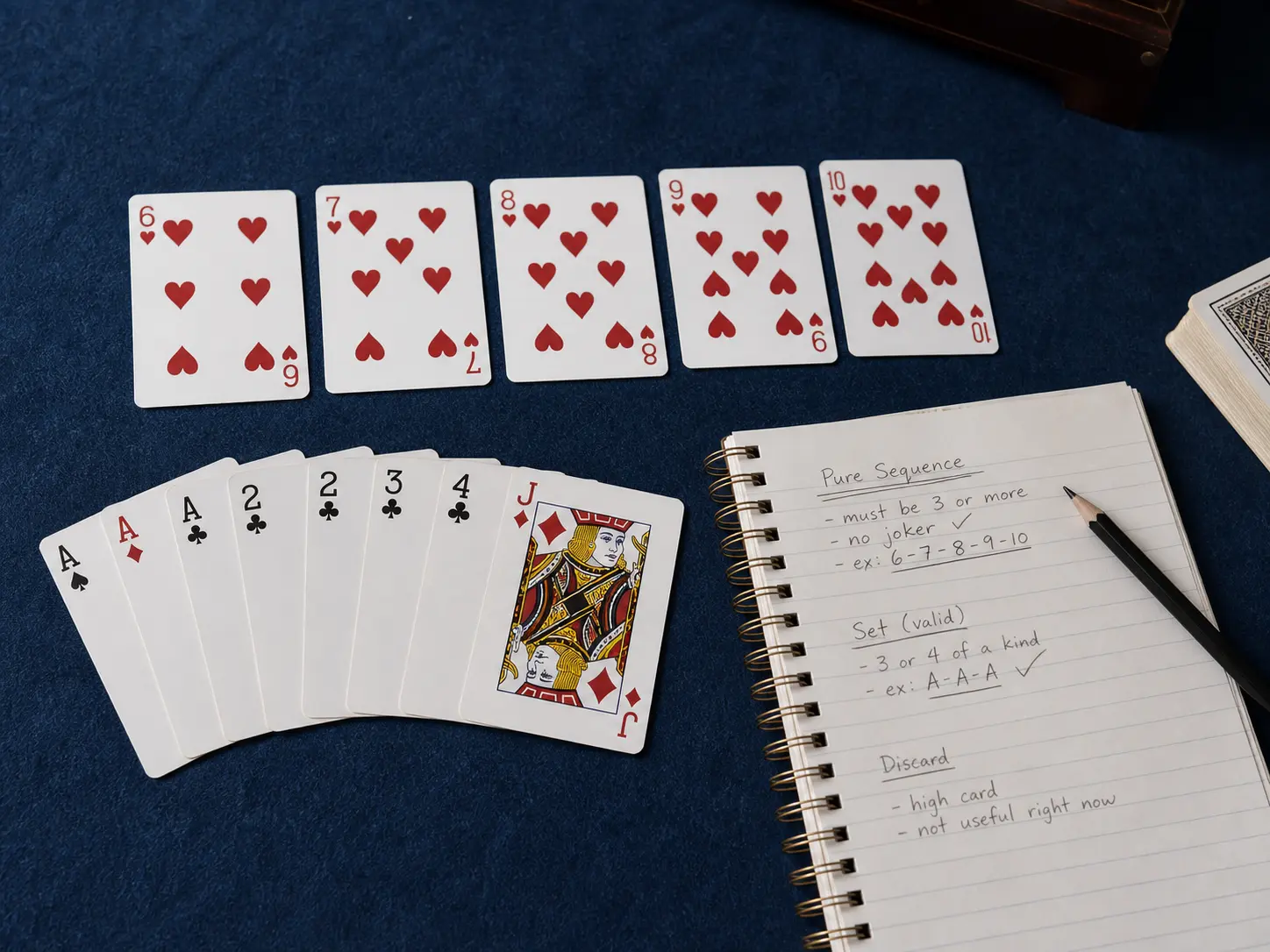
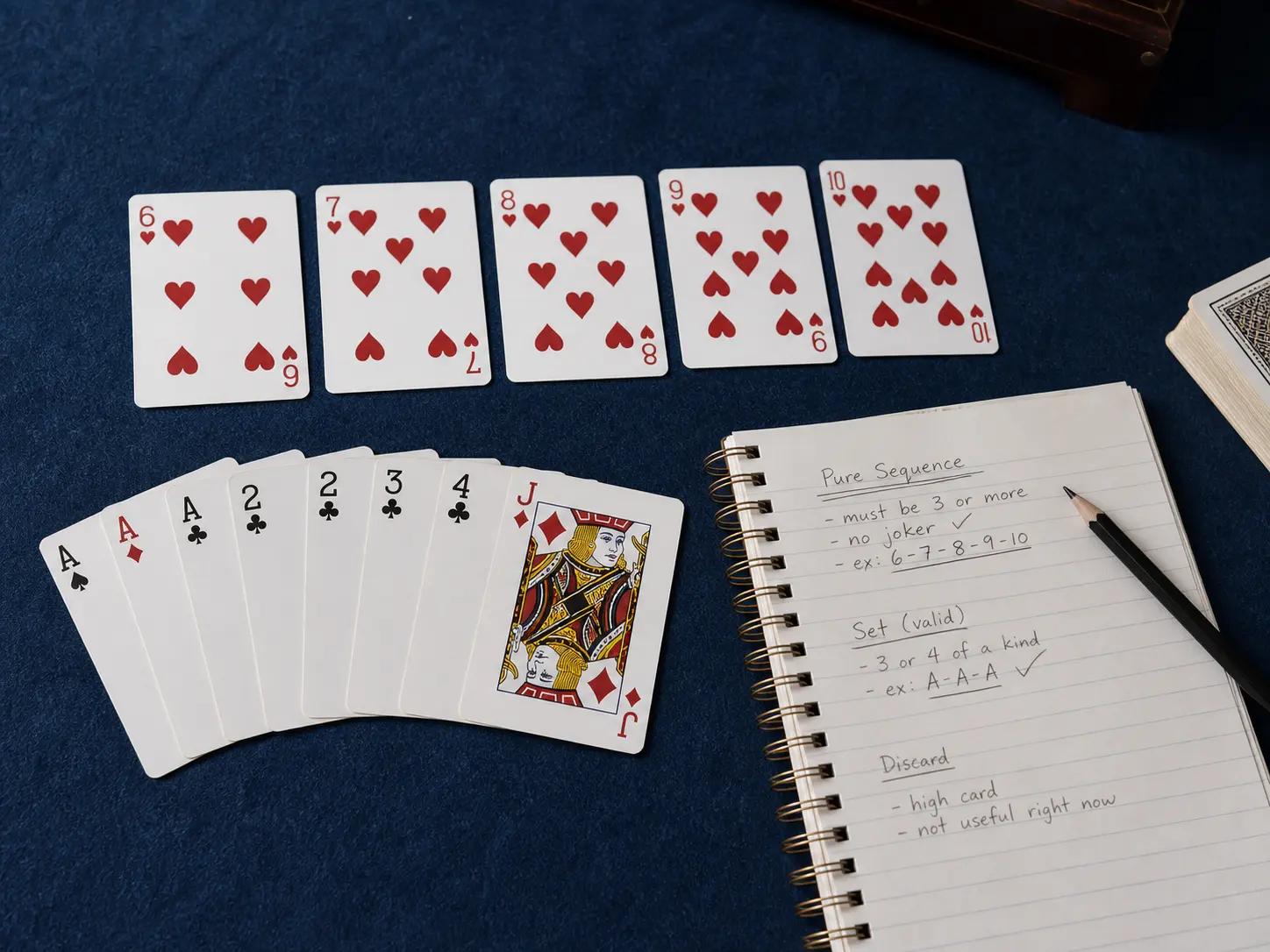
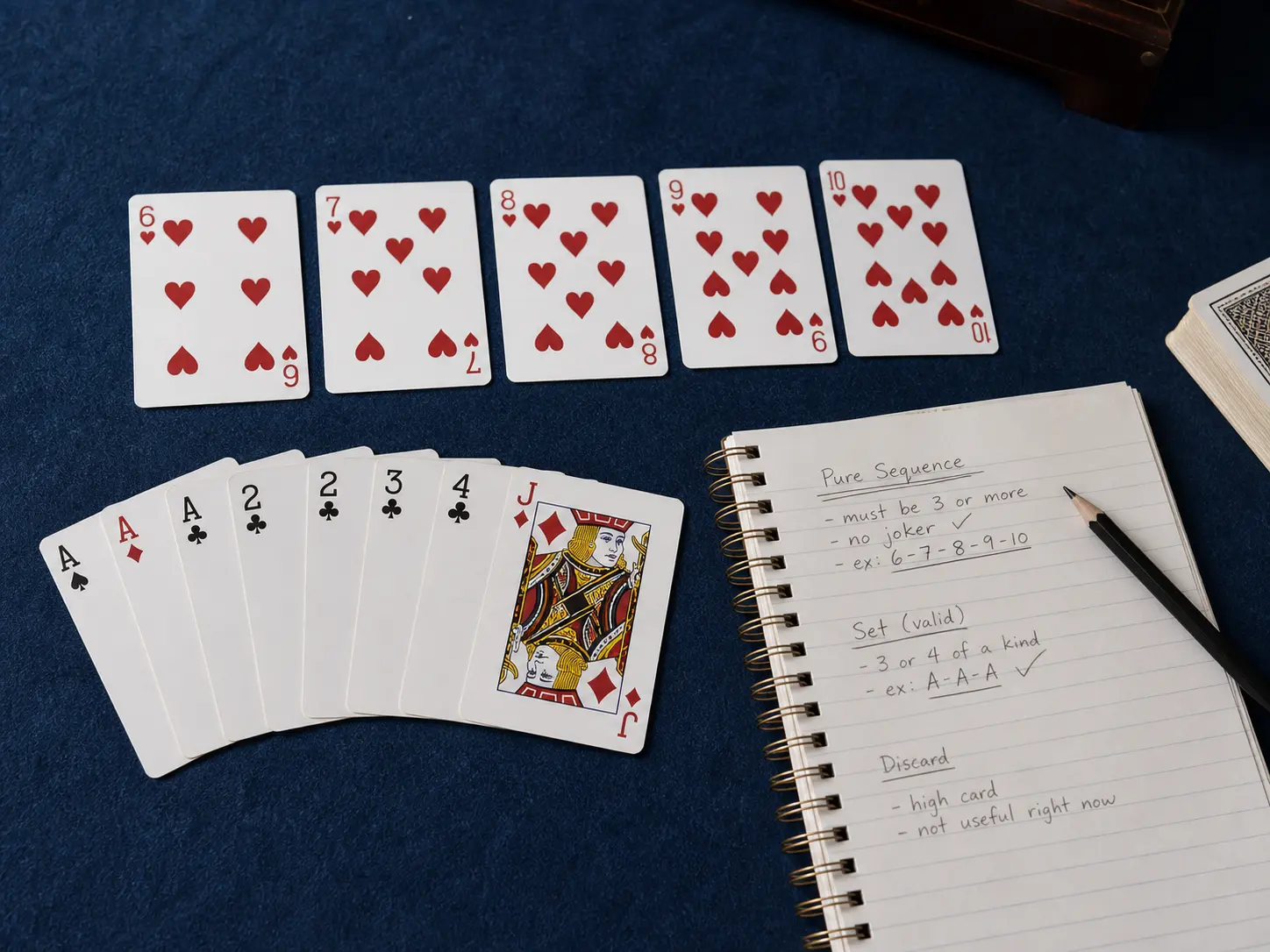
Rummy becomes easier to judge when the cards are grouped by function rather than by hope.

Three or more consecutive cards from the same suit, without a joker. In many common rulesets, one pure sequence is a basic requirement for a valid declaration.
A joker can stand in for a missing card. It helps complete a run, but it does not remove the need to understand the original pattern.
Cards share a rank while using different suits. A set can support a hand, but it cannot replace a required pure sequence.
Sort by suit first, then look for connected ranks. This makes the cost of a discard visible before the next draw.
The distinction is small on a card fan and decisive at declaration time.
Same suit, consecutive ranks
No joker is needed
Consecutive pattern with a substitute
Joker fills a missing position
Same rank, different suits
Supports the hand but is not a run
Points rummy usually resolves around the score of a single deal. Pool formats carry a running total until a player crosses the stated limit. Deals rummy sets a fixed number of deals, making the rhythm different again.
Those labels are only a starting point. Read the table rules, entry conditions, timeout behavior and settlement wording supplied by the operator before committing anything.
A good discard can improve the shape of a hand. It cannot guarantee the next draw, control another player's choices or turn a weak position into a certain result. The honest question is narrower: which visible information supports this decision, and what remains unknown?
Track the cards you have seen, protect the structure you already need and avoid chasing a distant combination when the penalty for missing it is large. A tidy plan is useful only while it remains responsive to the table.
Read practical strategy notesGood game information is not enough if the surrounding experience makes basic account and payment decisions hard to verify.
Look for complete terms, visible support routes, clear game states and a history that lets you check what happened.
A usable interface makes entries, deductions and settlement language easy to inspect rather than burying them in promotional panels.
Before using any commercial service, confirm the details that protect your account and your time.

Domain ownership, support access, account controls and payment language can be checked. Claims about guaranteed results, fixed returns or effortless wins should not be treated as evidence.
Review the safety checklistChanges to rules, product behavior and access conditions deserve dates, sources and a clear line between fact and interpretation.
The three labels describe the same 13-card deal, but they answer three different questions about when a session ends and how the score is settled.
A practical walk-through of the wording shifts that turn an otherwise ordinary hand into a disputed one, and where to look before the next session starts.
Separate a genuine change in play from a new banner, offer or interface label.
Check the official source, account controls and support path before following a new link.
Set a time and spending boundary before play, take breaks and do not chase losses. If play stops feeling voluntary or manageable, step away and seek local support.
Read responsible-play guidanceFollow the subject, not a sales script.
Editorial standard. satsport separates rules from opinion, labels uncertainty and avoids unsupported claims about operators or outcomes. Information can change, so check the relevant terms and local requirements before acting.